One of the most common questions homeowners ask before upgrading their roof is, do metal roofs attract lightning, and it is a fair concern in a place like Tulsa, where Oklahoma’s spot in the Great Plains brings plenty of thunderstorms each year. Because metal conducts electricity, it feels logical that a metal roof would somehow pull lightning out of the sky. The science tells a different and more reassuring story. Metal roofs do not attract lightning, and in many ways they are one of the safer choices you can put over your home during a storm. This guide separates the myth from the facts so you can decide based on physics rather than fear.
Do Metal Roofs Attract Lightning? The Science Says No
The belief that metal pulls lightning down is one of the most persistent roofing myths, and it confuses two very different things: conductivity and attraction. Metal is an excellent conductor, but conducting electricity is not the same as drawing a strike toward you. Lightning forms when an electrical charge builds between the clouds and the ground, and the bolt follows the path of least resistance to whatever offers the easiest route, which is almost always the tallest and most exposed object in the area. The National Weather Service is direct about this myth: lightning can strike any object in its path, and it goes for the tallest object in a particular area regardless of what that object is made of. A low-profile metal roof on a typical house is not a target simply because it is metal.
What Actually Determines Where Lightning Strikes
If material is not the deciding factor, what is? Researchers point to a handful of physical conditions that matter far more than your roof covering. Height is the big one, since the tallest point relative to its surroundings is the most likely to be hit, which is why a 60-foot pine tree in the yard is a better target than a single-story house. Isolation matters too, because an object that stands alone draws a strike more readily than one surrounded by similar structures. The size of the building and the local topography play a role as well. Weather authorities are clear that lightning is not actually drawn to metal over other materials, and that it does not always seek the tallest object overall, only the tallest one in a given area. Your roof’s composition sits near the bottom of that list of factors.
What Happens If Lightning Hits a Metal Roof
Here is where metal actually shines. When lightning strikes a metal roof, the connected panels give the energy a wide, low-resistance surface to travel across, so the charge spreads out and flows toward the ground instead of concentrating in one hot spot. Because metal is noncombustible, it does not ignite, which is a meaningful advantage in a strike. Compare that to wood shake or asphalt shingles, where the concentrated heat of a strike can start a fire. The roofing industry notes that a properly grounded metal roof actually conducts the energy across a broad area, reducing the heat transferred into the building and lowering the chance of fire damage. Metal roofs typically earn a Class A fire rating, the highest available. After a strike, the worst a metal roof usually shows is a small burn mark or pinhole, while the structure stays intact.
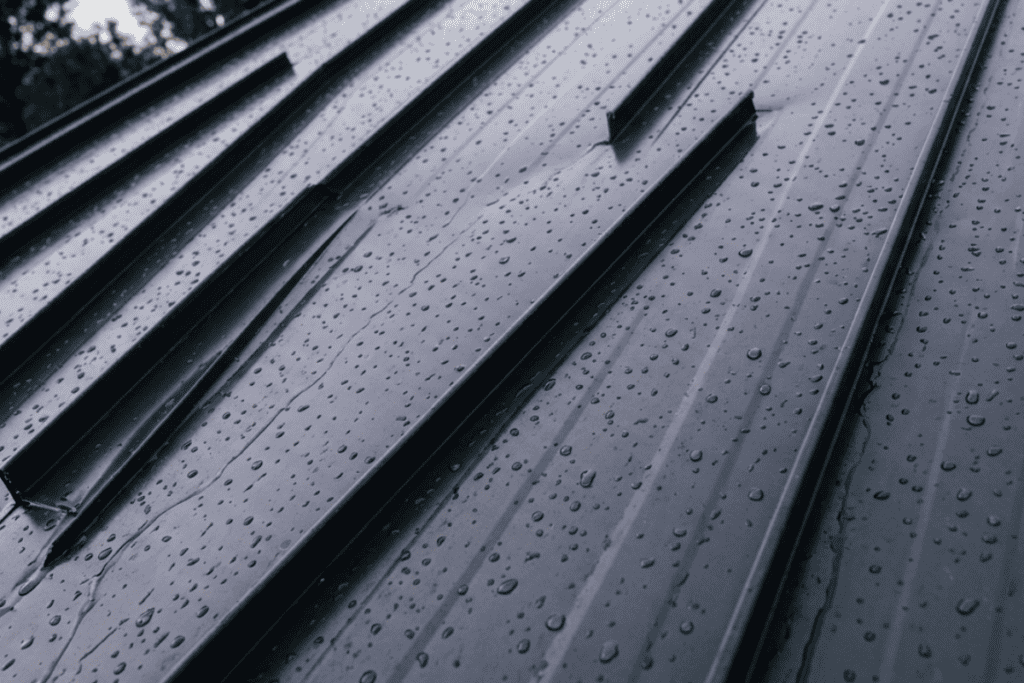
Metal Roof vs. Other Materials in a Storm
When you weigh metal against other common roofing materials during severe weather, the comparison favors metal in several ways:
- It does not increase the probability of being struck by lightning.
- It is noncombustible and usually carries a Class A fire rating, the highest level.
- It disperses a strike’s energy across the panels rather than concentrating it.
- It is far less likely to catch fire than wood shake or asphalt shingles when struck.
- It stands up well to the hail and high winds that often accompany Oklahoma storms.
Do You Need a Lightning Rod or Grounding?
For the vast majority of homes, the answer is no. Building codes generally do not require special lightning protection for a metal-roofed house, and a metal roof on its own does not need to be grounded for normal residential use. Lightning protection systems, which use air terminals, conductors, and ground rods to channel a strike safely into the earth, are usually reserved for tall, isolated, or high-value structures, or for homes in unusually high-risk locations. If you are still concerned, a qualified professional can run a risk assessment and design a system tailored to your property. It helps to remember the basic facts about lightning behavior, because most worry about metal roofs comes from a myth rather than the actual risk.
Other Reasons Tulsa Homeowners Choose Metal
Lightning safety is only one part of the appeal. Homeowners across the Tulsa area often choose metal for a combination of benefits:
- A long lifespan, frequently 40 to 70 years, which is well beyond a typical asphalt roof.
- Energy efficiency, since reflective metal can reduce summer heat gain and cooling costs.
- Strong fire resistance, thanks to its noncombustible nature.
- Low maintenance and resistance to mold, mildew, and pests.
- Recyclability, since metal roofing is often made from and can be recycled into other materials.
Why Choose Standard Exteriors and Roofing
Standard Exteriors and Roofing has helped Tulsa homeowners weigh their roofing options with clear, honest information since 2014, and metal roofing is one of our specialties. We install standing seam and other metal roof systems built to handle Oklahoma’s hail, wind, and frequent thunderstorms, and we are happy to walk you through the real pros and cons rather than the myths. If you have been holding back on a metal roof because of the lightning question, let us answer it in person and show you what a properly installed system looks like. Call our team at (844) 766-3918 to schedule a consultation and a free estimate.
Conclusion
So, do metal roofs attract lightning? No. Strike probability comes down to height, isolation, size, and location, not the material on your roof, and once you understand that, the biggest worry about metal tends to fall away. If anything, metal’s noncombustible nature and its ability to disperse a strike make it one of the safer roofs to have over your head when an Oklahoma storm rolls in. When you are ready to explore a durable, storm-ready metal roof for your home, reach out to Standard Exteriors and Roofing at (844) 766-3918 for an honest consultation built around the facts.
Frequently Asked Questions
Do metal roofs attract lightning more than other roofs?
No. A metal roof is no more likely to be struck by lightning than a shingle, tile, or wood roof on the same building. Lightning is drawn to the tallest and most isolated objects in an area, not to a particular roofing material. Conductivity is not the same thing as attraction.
Is a metal roof safe during a thunderstorm?
Yes, a metal roof is considered one of the safer options during a storm. Because metal does not burn and spreads the electrical energy across its surface, a struck metal roof is less likely to catch fire than a wood or asphalt roof. The roof typically shows only minor marks rather than igniting.
What happens when lightning strikes a metal roof?
The energy spreads quickly across the connected metal panels instead of concentrating in one spot, then travels toward the ground. Because metal is noncombustible, this dispersal greatly reduces the chance of a fire. The strike point may show a small burn mark or pinhole, but the roof usually stays intact.
Do metal roofs need to be grounded?
A metal roof on its own does not require special grounding for a typical home, and building codes generally do not mandate it. If a full lightning protection system is installed, the metal panels are bonded and connected to grounding so the current has a safe path to earth. A professional can advise whether your specific home would benefit.
Does a metal roof need a lightning rod?
Most single-family homes with metal roofs do not need a lightning rod, and codes do not require one. Lightning protection systems are usually recommended only for tall, isolated, or high-value structures, or for homes in especially high-risk locations. A risk assessment by a qualified professional can determine whether one makes sense for your property.
