
If you have ever cleaned a window only to realize the haze will not budge, you are probably asking why are my windows foggy between the panes and what that cloudiness means for your Tulsa home. The short answer is that the moisture is trapped inside the glass unit itself, not on a surface you can reach with a cloth. That milky, streaked look is one of the clearest signs that the sealed glass has failed, and once it does, the fog tends to creep back every time the temperature swings. The good news is that this is a well understood problem with a clear path forward, and understanding it puts you in control of the decision rather than at the mercy of guesswork.
How a Double-Pane Window Is Supposed to Work
Most homes built or updated in the last few decades use double-pane or triple-pane windows, also called insulated glass units. Two or three sheets of glass are separated by a spacer and sealed tight at the edges, and the gap between them is filled with an insulated layer of inert gas such as argon or krypton. That gas slows the transfer of heat far better than plain air, which is why a sealed unit keeps your home warmer in winter and cooler during a long Oklahoma summer. The spacer also holds a drying agent called a desiccant, whose job is to soak up any tiny amount of moisture that sneaks in during manufacturing. As long as the perimeter seal stays intact, the space stays dry and crystal clear for years.
Why Are My Windows Foggy Between the Panes? The Real Cause
When the perimeter seal breaks down, the whole system unravels. The protective gas escapes, ordinary outdoor air takes its place, and that outside air carries humidity with it. When the temperature changes, that trapped humidity condenses on the inside surfaces of the glass, and you see the result as fog, haze, or cloudiness that no amount of cleaning will remove. Eventually the desiccant becomes fully saturated and can no longer absorb the incoming moisture, so the fogging gets worse and more permanent over time. This is why the haze behaves so strangely, appearing on cool mornings, fading in afternoon sun, and returning again. The window is not dirty. It has simply lost its airtight barrier, and the moisture cycle continues until the glass is replaced.
What Makes Window Seals Fail
Seal failure is rarely caused by anything a homeowner did wrong. It is the predictable result of years of stress on a sealed unit. The most common factors include:
- Daily and seasonal thermal cycling, where glass expands in heat and contracts in cold until the seal slowly loses its flexibility.
- Long, direct sun exposure, which speeds up that expansion and contraction, especially on the south and west sides of a home.
- Standing water or poor drainage around the frame, which keeps the seal damp and accelerates breakdown.
- Simple age, since seal materials are chemical compounds that harden and shrink over time.
- Installation stress, where a unit that was not set squarely carries uneven pressure on the seal from day one.
Does It Matter Where the Fog Forms?
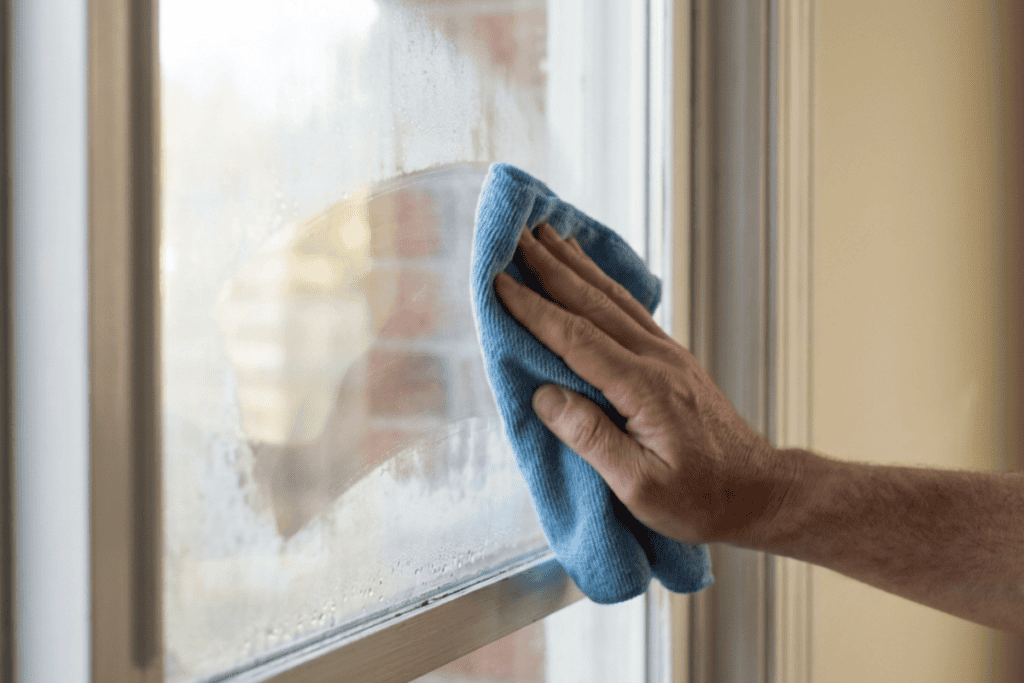
Location is the single most useful clue, and it tells you whether you have a real problem or a normal one. Condensation on the room-facing side of the glass usually means indoor humidity is high, which is common in kitchens, bathrooms, and tightly sealed modern homes, and it can often be wiped away or reduced with better ventilation. Condensation on the outside surface in the morning is often a sign that your windows are insulating well, and it tends to burn off as the sun rises. Only fog that sits trapped between the panes, where you cannot reach it from either side, points to a failed seal. If you can touch the moisture, it is a surface issue. If you cannot, it is sealed inside.
Why a Foggy Window Is More Than a Cosmetic Problem
It is tempting to ignore a hazy window because the glass still keeps the rain out, but a failed unit quietly costs you in several ways:
- Lost insulation, because once the gas escapes the window performs closer to a single pane than the efficient unit it was designed to be.
- Higher energy bills, since your heating and cooling system has to work harder to hold a comfortable temperature.
- Mold or mildew risk along the edges, where trapped moisture lingers.
- A permanently obscured view, with cloudiness that worsens in direct sunlight.
- Mineral staining etched into the inner glass from repeated condensation cycles.
Replacing a failed unit with a modern, energy certified window restores both clarity and comfort, and it can meaningfully reduce the heating and cooling load that drives your monthly bills.
Can You Fix Foggy Windows, or Do You Need New Ones?
You have a few realistic options. Some companies offer a defogging service that drills small holes in the glass to vent the moisture, but this is a cosmetic step that does not restore the insulating gas or the airtight seal, so the energy performance stays compromised. A better long-term path is replacing the insulated glass unit while keeping the existing frame, which is often the most cost effective fix when the frame is still sound. If the frame is warped, rotted, or badly aged, replacing the full window is usually the smarter investment, especially since heat gain and loss through windows accounts for a large share of a home’s heating and cooling energy. When you compare options, look at the whole-unit U-factor rather than just the glass rating, since that number reflects how the entire window will perform in your climate.
Why Choose Standard Exteriors and Roofing
Homeowners across Tulsa and the surrounding Oklahoma communities trust Standard Exteriors and Roofing because we treat your windows as part of a complete, weather-tight exterior rather than a one-off repair. Since 2014 we have helped local property owners diagnose foggy glass, weigh repair against replacement honestly, and choose windows built to handle Oklahoma’s heat, cold snaps, and storms. Our window professionals will tell you plainly whether a glass-only swap will solve the problem or whether full replacement is the better value, with no pressure and no upsell.
Conclusion
Foggy glass between the panes is not a cleaning problem and it is not your fault. It is the sign of a failed seal, and while the moisture itself is not an emergency, the lost insulation, rising energy costs, and creeping mold risk make it worth addressing before it spreads to more windows. Knowing where the fog forms, what causes seals to break down, and what your repair options are puts you in a strong position to make a confident choice. When you are ready to clear up the view and bring back your home’s comfort, reach out to Standard Exteriors and Roofing for a free estimate and a clear, honest recommendation.
If those hazy panes are bothering you, call our Tulsa team to schedule a straightforward window assessment.
Frequently Asked Questions
Can foggy windows be fixed without replacing them?
Once moisture is trapped between the panes, the seal has already failed and cannot be returned to its original airtight condition. Some companies offer a defogging service that removes the visible moisture, but this is a cosmetic step that does not restore the insulating gas. The durable fix is replacing the insulated glass unit or the full window, depending on the condition of the frame.
Why do my windows fog up in the morning?
Morning fog on the room side or outdoor side of the glass is usually surface condensation, not seal failure. It forms when humid air meets cooler glass and typically clears as the day warms up. If the haze sits between the panes and cannot be wiped from either side, that points to a failed seal instead.
Is condensation between window panes dangerous?
It is not an immediate safety hazard, but it should not be ignored. A failed seal lowers the window’s insulating value, which can raise heating and cooling costs, and lingering moisture can encourage mold or mildew along the edges over time. Addressing it early helps prevent further damage to the frame and surrounding wall.
How long do double-pane windows usually last before fogging?
Quality insulated windows often last about 15 to 25 years before seals begin to fail, though this varies with climate, installation, and product grade. Intense sun, large temperature swings, and poor drainage can shorten that lifespan. Lower-grade units sometimes show fogging within 5 to 10 years.
Does fog between the panes always mean the seal is broken?
Yes. Moisture can only become trapped between the panes if the perimeter seal has failed and allowed outside air inside. Condensation on the interior or exterior surface is a different issue and usually relates to humidity rather than a broken seal.
