
If sheets of water pour over the front of your gutters during every storm, you have probably stood at the window wondering why do my gutters overflow when it rains and whether it is doing damage you cannot see. For homeowners across Tulsa and the rest of northeastern Oklahoma, where spring and summer can bring fast, heavy downpours, an overflowing gutter is more than an annoyance. Your gutter system exists to capture roof water and carry it away from the house, so when it spills over instead, that water lands exactly where you do not want it. The reassuring part is that the causes are limited and well understood, and most of them are fixable once you know what to look for. A working gutter is the first line of defense in managing stormwater around your property.
Why Do My Gutters Overflow When It Rains? Start With the Clog
Nine times out of ten, an overflowing gutter is a clogged gutter. Leaves, pine needles, roof grit, and twigs collect in the trough and pack down into a dam that water cannot get past. During a light drizzle a partially clogged gutter may still trickle along, but a heavy rain overwhelms that limited path and the water has nowhere to go except over the edge. The frustrating part is that the blockage is usually invisible from the ground, so the first sign you get is water cascading down your siding during a storm. Before you assume anything more complicated, the trough and the downspouts both need to be checked, because a clog in either one produces the same overflow.
When Clean Gutters Still Overflow
If you have cleared the debris and water is still spilling, the problem is usually how the system was hung or sized. Gutters need a slight, deliberate slope toward the downspouts, generally about a quarter inch of fall for every ten feet of run, so that water keeps moving instead of pooling. Over the years, brackets loosen and sections sag, which flattens or even reverses that slope and lets water sit until it brims over. A downspout that is clogged or simply too narrow creates a bottleneck, so the trough fills like a bathtub that cannot drain. And on homes with steep roofs or roof valleys, water can race down and shoot straight past the gutter at the points where two roof planes meet.
The Usual Suspects Behind Gutter Overflow
When you are trying to pin down the cause, it usually comes down to one or more of these:
- Clogged gutters packed with leaves, needles, and roof debris.
- A clogged or undersized downspout that cannot drain water as fast as it arrives.
- Improper slope, where sagging or poorly hung sections let water pool instead of flow.
- Undersized gutters, such as a standard 5-inch trough on a large or steep roof.
- Too few downspouts, leaving long runs of gutter with no quick exit for the water.
- Roof valleys, where fast-moving water overshoots the gutter during heavy rain.
When the Rain Is Simply Too Heavy
Sometimes the gutters are clean, well pitched, and properly sized, and they still overflow during the most intense storms. That can be normal. A single inch of rain drops roughly 600 gallons of water onto every 1,000 square feet of roof, so a typical home sheds well over a thousand gallons during a modest storm. When a fast-moving thunderstorm dumps two inches in an hour, the volume of runoff can briefly exceed what any standard system was built to carry. The same two inches spread over six hours would drain without trouble. So before you tear into a repair, it helps to consider whether the overflow only happens in the heaviest cloudbursts or whether it spills even in ordinary rain, because that distinction points you toward the real cause.
Why Overflowing Gutters Are a Bigger Deal Than They Look
It is easy to shrug off water spilling over an edge, but where that water lands is the problem. Overflow concentrates roof runoff right against the base of your home, and that creates a chain of issues:
- Foundation stress, as saturated soil presses against and seeps into the foundation, basement, or crawl space.
- Soil erosion along the drip line, which can wash out landscaping and undermine walkways.
- Rotted fascia and soffit, since the wood behind the gutter stays wet and slowly fails.
- Indoor moisture and mold, which can take hold when water repeatedly intrudes near the foundation.
- Damaged exterior paint and siding, streaked and stained by constant runoff.
How to Stop Gutters From Overflowing
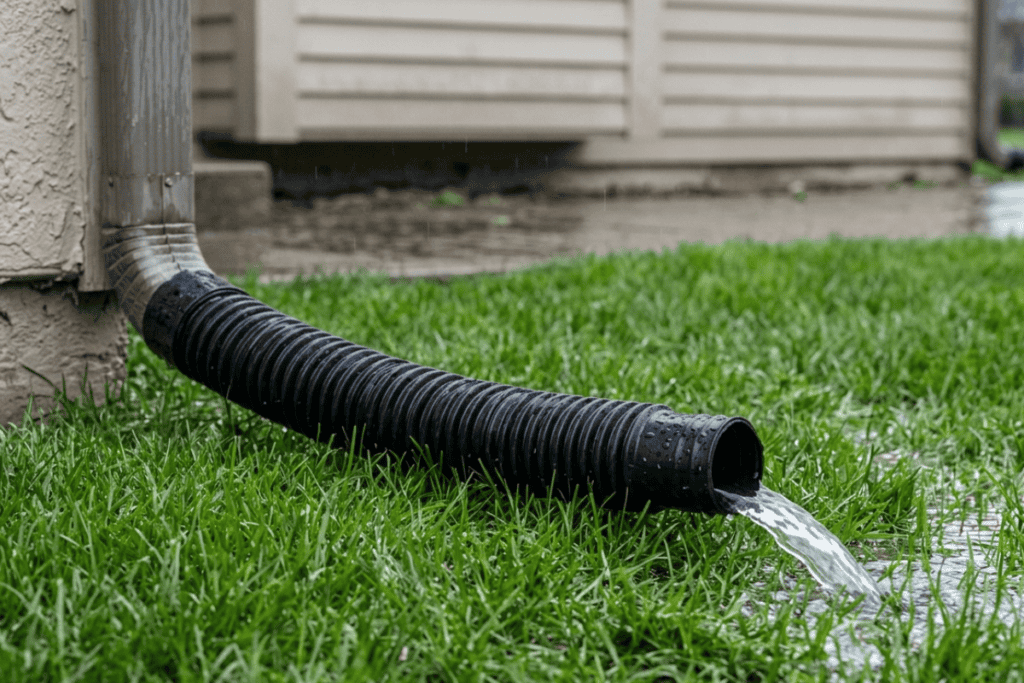
The fix depends on the cause, which is why diagnosis comes first. Clearing both the gutters and the downspouts solves most cases on its own, and doing it before the storm seasons keeps the system ready when it matters. If the slope is off, the gutters can be re-hung and re-pitched so water flows toward the outlets. When capacity is the issue, adding downspouts or upgrading to a larger gutter and downspout size gives the system more room to move water. Just as important is what happens at ground level. Extending and aiming downspouts to redirect water away from the house, paired with good grading that slopes the soil away from the foundation, keeps captured water from simply pooling back against the home. A splash block or a buried extension that carries water several feet out finishes the job.
Why Choose Standard Exteriors and Roofing
Tulsa homeowners call Standard Exteriors and Roofing because we look at the whole system, not just the symptom. Since 2014 we have installed and repaired gutters, downspouts, and gutter guard systems built to handle Oklahoma’s sudden, heavy storms, and we connect the dots between your roof, your gutters, and the drainage around your foundation. Rather than guess, our team inspects the slope, the capacity, and the downspouts to find why your gutters are overflowing, then recommends the most direct fix instead of the most expensive one. If water is spilling over with every storm, call our Tulsa crew at (844) 766-3918 to schedule a gutter inspection before the next downpour.
Conclusion
Overflowing gutters almost always trace back to a clog, a slope problem, an undersized system, too few downspouts, or simply rain that is heavier than the system was built for. None of those is a mystery, and most are straightforward to correct once the cause is identified. Because that spilling water targets your foundation, fascia, and landscaping, it pays to address it before a wet season turns a minor overflow into a costly repair.
When you want a clear answer and a lasting fix, reach out to Standard Exteriors and Roofing for a free estimate and an honest assessment of your gutter system.
Frequently Asked Questions
Why do my gutters overflow even when they are clean?
Clean gutters can still overflow if they are pitched incorrectly, sagging, or too small for the roof area they serve. Water also backs up when a downspout is clogged even though the gutter trough looks clear. During very heavy rain, an undersized system simply cannot move water fast enough, so it spills over the front edge.
How do I stop my gutters from overflowing?
Start by clearing debris from both the gutters and the downspouts, since clogs are the most common cause. If they are clean, check that the gutters slope slightly toward the downspouts and are firmly attached. Adding downspouts, upgrading to a larger gutter size, and extending downspouts away from the house all help when capacity or drainage is the real problem.
Can overflowing gutters damage your foundation?
Yes. When gutters overflow, water pours straight down against the base of the house and saturates the soil around the foundation. Over time this can lead to cracks, basement or crawl space moisture, and erosion. Directing roof water several feet away from the foundation is one of the simplest ways to prevent that damage.
How often should gutters be cleaned?
Most homes need gutter cleaning at least twice a year, usually in late spring and again in fall. Homes surrounded by trees may need it three or four times a year because leaves and needles build up faster. Cleaning before the heavy storm seasons helps prevent clogs when the system is working hardest.
Will bigger gutters stop them from overflowing?
Larger gutters and downspouts help when the existing system is genuinely undersized for a large or steep roof. Moving from a standard 5-inch gutter to a 6-inch gutter, or from a 2×3 inch downspout to a 3×4 inch downspout, increases how much water the system can carry. They will not solve overflow caused by clogs or poor slope, so the cause should be confirmed first.
